


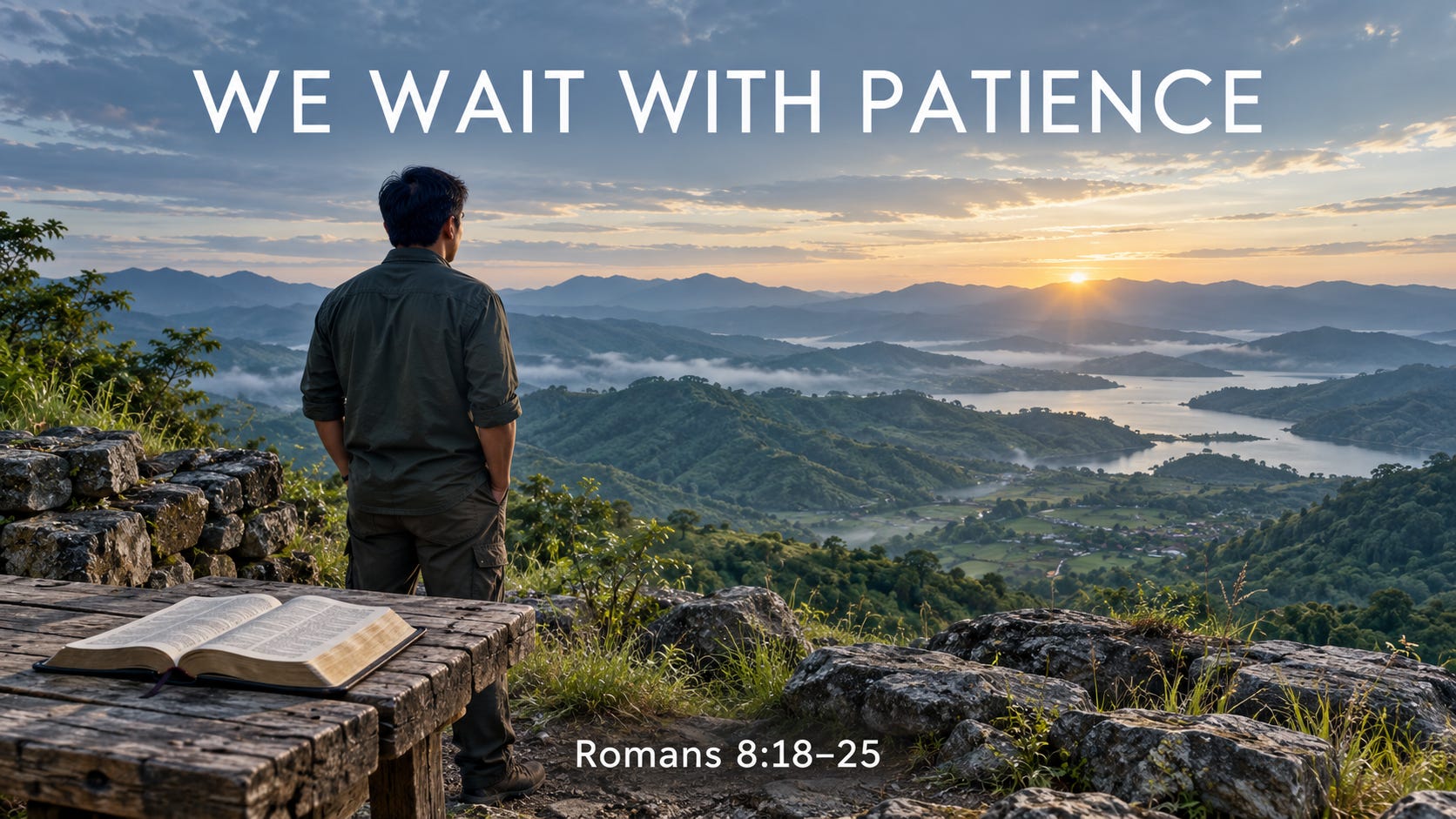
Sermon 28 of the Series: “Romans: Gospel Blueprint.”
Paul answered a practical question: if the Spirit dwells within us, what do we now owe, and who are we now? He began with an obligation. Believers are debtors, but not to the flesh, to live according to the flesh (8:12). Living by the flesh leads to death, but putting to death the deeds of the body by the Spirit leads to life (8:13). The apostle then moved from obligation to identity. All who are led by the Spirit of God are sons of God (8:14). They did not receive a spirit of slavery that brings them back into fear. They received the Spirit of adoption, by whom they cry, “Abba! Father!” (8:15). The Spirit Himself bears witness with our spirit that we are children of God (8:16). And if children, then heirs: heirs of God and fellow heirs with Christ, provided we suffer with Him so that we may also be glorified with Him (8:17). That last line joins two words most of us would rather keep apart: suffering and glory. If we are God’s children and heirs, why do we still suffer, and how should we view that suffering while we wait for the glory to come? Paul answers by weighing the present against the future, and by showing that the whole creation is waiting with us.
Not Worth Comparing
Paul picks up the word he ended with: suffering. He does not deny it or make it small. He weighs it. On one side is the suffering of this present time; on the other is the glory that will be revealed to us. The scale is not close. And it is not only believers who are waiting for that day; creation itself is watching for it.
Romans 8:18-19, ESV: For I consider that the sufferings of this present time are not worth comparing with the glory that is to be revealed to us. 19 For the creation waits with eager longing for the revealing of the sons of God.
The word “consider” is the language of careful calculation, not wishful thinking. Paul has done the math. Notice also that the glory is “to be revealed.” It already exists, but it is still hidden. Believers are already sons of God (8:14), but the world does not yet see it. On that day, what is true of us now will be shown openly, and creation is leaning forward, eager to see it.
Creation Groans
Paul explains why creation is waiting. Due to sin, it was subjected to futility, not by its own choice, but by the will of the One who subjected it. Yet that subjection came with hope. One day, creation will be set free from its bondage to decay and share in the freedom of God’s children. Until then, it groans like a woman in labor.
Romans 8:20-22: For the creation was subjected to futility, not willingly, but because of him who subjected it, in hope 21 that the creation itself will be set free from its bondage to corruption and obtain the freedom of the glory of the children of God. 22 For we know that the whole creation has been groaning together in the pains of childbirth until now.
Paul refers to the Genesis curse where creation, despite being sinless, suffers decay and death as a consequence of Adam’s sin.[1] However, this suffering was given “in hope” and is likened to labor pains rather than death, as creation will ultimately be restored alongside God’s children.
We Groan in Hope
Paul now turns from creation to believers. We also groan. We have the firstfruits of the Spirit, but we still wait for the full blessing: our adoption as sons, the redemption of our bodies. Paul then defines hope. It is waiting for what we do not yet see, and waiting with patience.
Romans 8:23-25: And not only the creation, but we ourselves, who have the firstfruits of the Spirit, groan inwardly as we wait eagerly for adoption as sons, the redemption of our bodies. 24 For in this hope we were saved. Now hope that is seen is not hope. For who hopes for what he sees? 25 But if we hope for what we do not see, we wait for it with patience.
Although believers are already God’s children, their adoption remains incomplete until the bodily resurrection. The Holy Spirit serves as a guarantee of this promise, providing Christians with a certain hope in the unseen future that produces patience rather than panic.[2]
Application
1. Weigh your suffering against the glory to come. Do not pretend your pain is not real, but do not let it have the final word. When troubles press on you, deliberately set them beside the glory God has promised.
2. View the world’s suffering and decay as labor pains rather than death, signaling both the curse of sin and God’s continued presence. We should care for creation and help those suffering, trusting in God’s ultimate restoration.
3. Groaning does not indicate a lack of faith. Bring your struggles to God in prayer and wait patiently, assured that your salvation, complete adoption, and bodily resurrection are guaranteed.
[1] Frank S. Thielman, Romans, ed. Clinton E. Arnold, Exegetical Commentary on the New Testament (Zondervan Academic, 2018), 8:20. Thielman identifies the one who subjected creation as God, in light of the curse in Genesis 3.
[2] F. F. Bruce, Romans (IVP, 2015), 8:23. Bruce explains that the Holy Spirit indwelling the believer is the firstfruits and foretaste of the full inheritance to come.
Poem
GROANING IN HOPE
by Ed Pilapil Jr.

The sufferings we face today
It’s nothing compared to that day
Not worth comparing, Paul did say
For what’s ahead will not decay

Creation waits, it longs to see
God’s children displaying glory
But now, there is mortal decay
Yet in this form, we will not stay

It groans like birth pains, sharp and long
Not death’s despair, but labor’s song
And we who have the Spirit too
Goran inwardly for bodies new

Already sons, yet still we wait
We so long for that future state
In hope we’re saved, though not in sight
With patience, waiting for the light
Study Guide
1. How does Paul compare present suffering with future glory? What does it mean that the glory is “to be revealed”? (Ro 8:18-19)
2. Why does creation groan, and what does the image of childbirth teach us about its future? Connect your answer to Genesis 3:17-19. (Ro 8:20-22)
3. If believers have already received the Spirit of adoption (8:15), why does Paul say we still wait for adoption? How should this hope shape the way we wait? (Ro 8:23-25)
